
Links #32
Anti-aging is the final frontier in heart health, the world isn't vulnerable, and much more.

1.
Cardiac atheroma at the limits – are we fighting the final battle? A 2020 talk by Peter Libby, leading researcher on heart disease. Does a nice job of mapping out all the paths we have to prevent heart disease.
One of the main categories of heart disease is atherosclerotic heart disease. This is caused by plaque buildup in the arteries. Every adult has these plaques growing in their blood vessels, but high blood pressure, high cholesterol, and damage to the vessels1 accelerates plaque buildup.
To date we have several medications2 that can bring blood cholesterol down with statins being first-line and new therapies such as PCSK9 inhibitors showing promise.
With the success here, research has moved to other means of reducing cardiovascular risk:
Reducing inflammation, the subject of several trials, with colchicine showing promise and general interest in inhibiting IL-6. See Libby’s more recent presentation on this here.
Insulin resistance, addressed by drugs like GLP-1 agonists and SGLT-2 inhibitors3.
Specialized treatments for clonal hematopoiesis; mutant cells in the bone marrow that produce mutant white blood cells.
My main takeaway here is that research on heart disease might end in some sense. More and more, the leading therapies look like anti-aging interventions. Many forms of heart disease seem to be caused by aging of vascular tissue. Once the non-aging problems are solved, the field might get absorbed into longevity research.
See also point 1 here for more CVD research.
Related: Enlicitide decanoate - Wikipedia. A promising cholesterol drug!
2.
There’s lots of talk of existential and catastrophic risks, but Croissanthology wonders, Is the world actually that vulnerable? And comes to the conclusion that no, it’s not. In many cases we have straightforward things we can do to reduce the risk, and good reasons to think that the worst case isn’t all that bad.
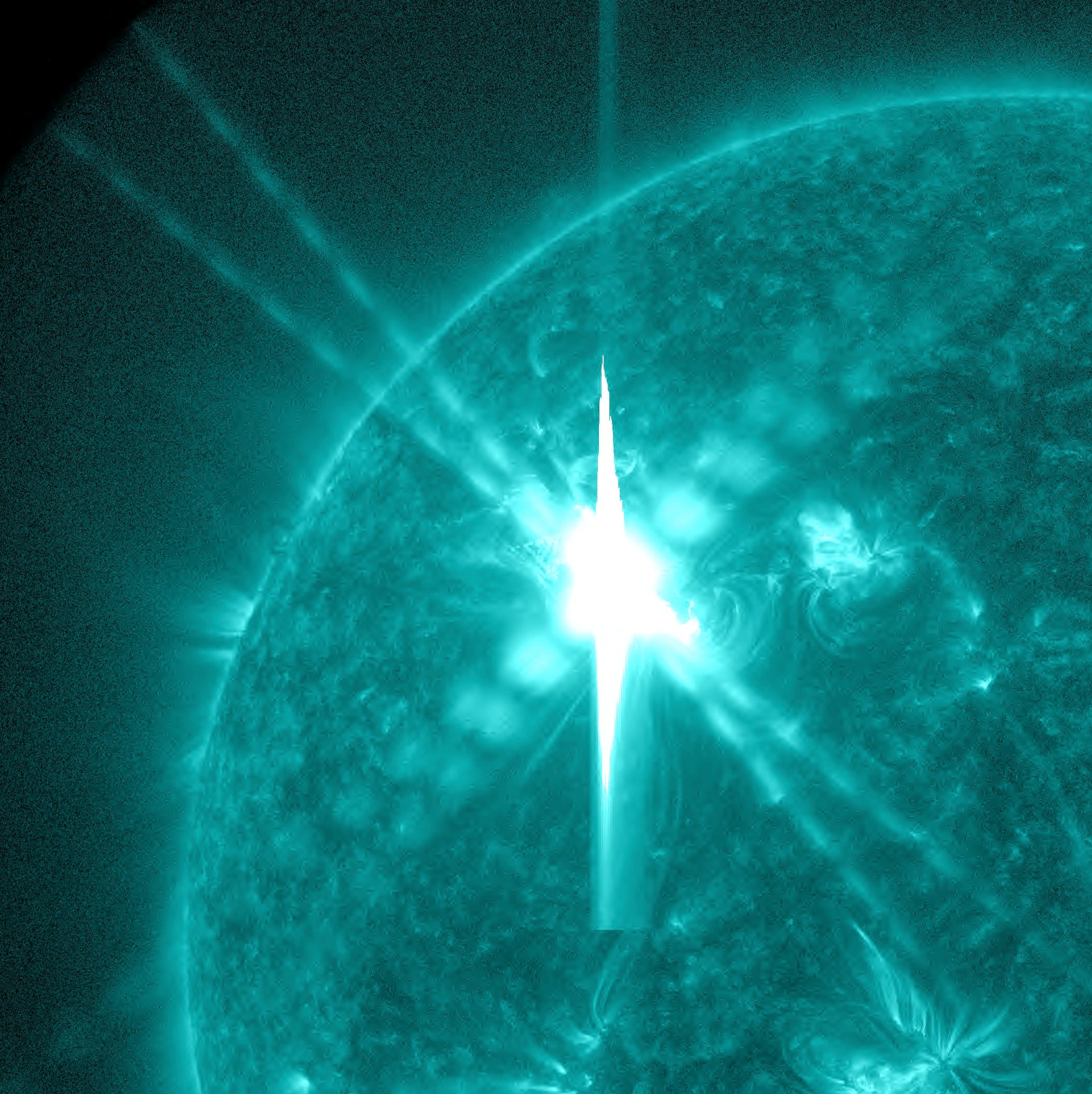
For instance, Croissanthology has a nice post on Solar Storms and how we can basically address their risks by installing lots of SolidGround systems (or building more transformers).

Croissanthology also has a post about how LLM cybersecurity risks in the long run are probably exaggerated. This is similar to comments by David Dalrymple that defense “just wins” as AI capabilities advance. This paper makes a similar point:
I found the above paper when reading the transcript of this podcast, which allays worries that AI might somehow destabilize our current nuclear stalemate:
Sam Winter-Levy and Nikita Lalwani on how AI won't end nuclear deterrence (probably) | 80,000 Hours
On the other hand, I think that laser weapons will destabilize the current nuclear paradigm … in a good way! Namely, I think laser defense will essentially end the threat of nuclear war.
[On a related note, here’s a nice review of the current state of combining laser beams coherently4: Towards Ultimate High-Power Scaling: Coherent Beam Combining of Fiber Lasers]
So if solar storms and cyber risk and nuclear war aren’t all that bad, what’s left? Pandemics. Abhishaike Mahajan has a nice post on this:
Reasons to be pessimistic (and optimistic) on the future of biosecurity
I find a of optimism from this post, bioweapons are genuinely hard, there’s little incentive to use them, and AI might genuinely accelerate defensive technologies like mRNA vaccine production. Far UV-C and glycol vapors might drastically reduce airborne transmission (though finding someone to pay for it is hard).
Related: Vincent Conitzer article on addressing misaligned AI by “[giving] the AI a (primary) goal of being turned off”.
EDIT: These two posts conclude that “… there are no new more powerful explosions on the horizon, or, with the potential exception of false vacuum decay, probably ever.”
Destroying the universe: How hard can it be? On false vacuum decay.
(Don't fear) the strangelet. On other possible uses of physics to destroy stuff.
Everything else
The Tiling Tree Method and The Tiling Tree Method, Part 2. An interesting way to exhaustively list possible solutions to a problem. I pay attention to any ideation technique that Ed Boyden uses.
A small polymerase ribozyme that can synthesize itself and its complementary strand. This is huge for understanding the origin of life. This strand of RNA can reproduce itself given short RNA blocks as “food”. Now we need a good understanding of how RNA blocks can form and why these blocks might accidentally assemble into something self-replicating.
Prescription strength: musings about the past/present/future of sarcopenia therapeutics. New drugs might allow anyone to have a muscular physique with only a little effort in the gym. That would be revolutionary for health outcomes.
Subvocal recognition allows you to convert your inner voice into text. Alter Ego is building a wearable device for this. Imagine controlling computers with your mind!
The First Multi-Behavior Brain Upload claims they uploaded a fruit fly. More skeptical takes from and Ariel Zeleznikow-Johnston and Dan Turner-Evans.
"I Found My People!" On finding a community that brings you joy.
Related: Make Your Own Bubble in 10 Easy Steps - by Bryan Caplan
Some relationships deepen when you tell the truth and some end. Committing to being honest has been valuable for my relationships too.
Why We Have Prison Gangs. Systems of government spring up in surprising places. See also Chris Blattman’s work on peace amongst different gangs.
the lottery of career success: or why you may want to bribe OpenAI. Because it’s hard to measure performance, career success often snowballs based on past prestige, which is substantially random.
We may miss the sweatshops. Developing countries used to escape poverty by moving into manufacturing. If AI automates many tasks, these countries will need to find a different path.
Inside the Farm Growing 3.5 Million Pounds on Half an Acre. Nice tour of a vertical farm growing leafy greens. This would pair well with off-grid solar and batteries. I’m coming around to the view that vertical/indoor/hydroponic farming can work well for veggies, while staple crop agriculture is hard to improve upon.
Everything you ever wanted to know about Roblox, but were afraid to ask a 12-year-old. The metaverse already exists, with all the good and bad that entails.
Sunbeam: Near-sun statites as beam platforms for beam-driven rockets. Proposal for new form of interstellar travel using particle beams. The main challenge is efficiently converting the beam into propulsion. One of the authors did an interview on this work here.
AI:
Doc-to-LoRA: Learning to Instantly Internalize Contexts. Load a document into a language model by modifying its weights.
Can LLMs Be Computers? Modify a transformer with a different attention mechanism to load algorithms directly into model weights!
Post-Training 50x Faster. Open-source code to fine tune Kimi-K2 using LoRA.
From e.g. smoking or inflammation.
Statins, bempedoic acid, ezetimibe, fibrates.
Plausibly the new myostatin inhibitors (which increase your muscle mass without the complications of steroids) would help here.
This is the main barrier to scaling to the laser power enough to make these kinds of defenses viable.
It seems to me that the far UV-C people should consider selling their devices in Japan as air-quality appliances and then using that as a means to gather data for medical certification. It seems perfectly suited for this use case because:
* East Asian cleanliness obsession
* Totally fine with the idea of standalone devices
* Small rooms
* "Japanese" device premium for marketing to the rest of the world