
Links #29
Qattara Depression project, short-range flying cars, fertility, electron beams and more.

This time I’m trying out more vingettes and fewer links overall.
1.
The Qattara Depression project is an old proposal to create a big sea in the middle of the Egyptian desert by channeling water from the Mediterranean sea to a region below sea level. Proponents suggest it could generate lots of electricity and create good conditions for agriculture.
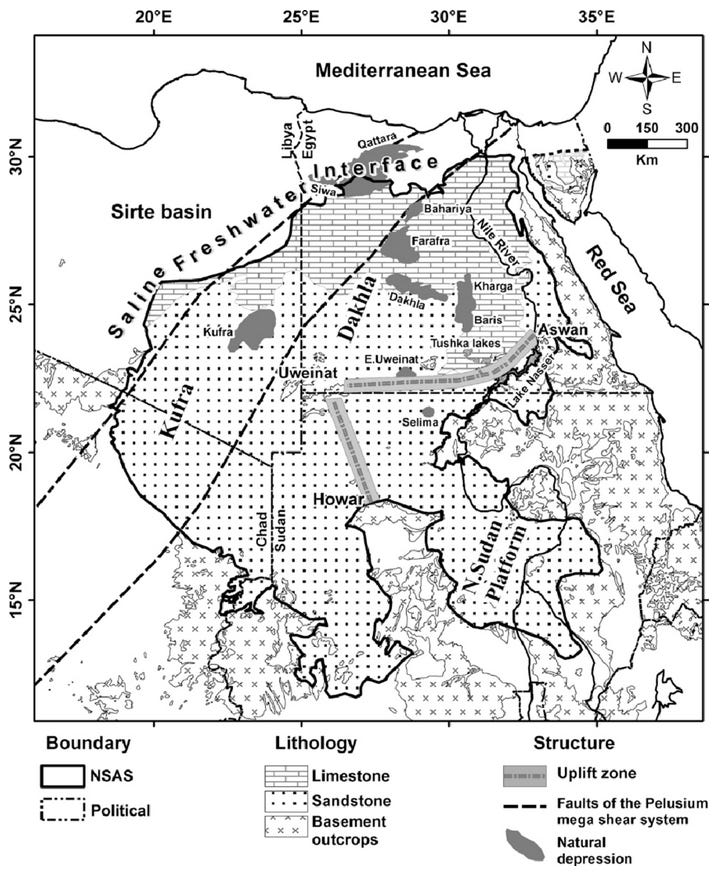
I just realized it’s a dumb idea. First, the Sahara is awash in cheap solar, so it does not need expensive hydro. Second, Egypt is already building out agriculture in the desert by bringing in freshwater. Third, an above ground-sea in the desert is the worst place to put water. Especially when you can store ~660x more water in the Nubian sandstone aquifer system underground.
There’s an opportunity to use solar and desalination at scale to keep the aquifer full and enable agriculture in the region.
2.
Luzia Bruckamp highlights econ job market papers related to fertility. I recommend reading for interesting summaries on the effects of paternity leave, C-sections, and more on fertility. The paper I found most striking was Build, Baby, Build: How Housing Shapes Fertility which finds that “[r]ising housing costs explain roughly half of the decline in the total fertility rate between the 2000s and 2010s” in the U.S. The author’s model suggest that by building large units desired by families, America would have returned to replacement fertility.
Not a job market paper, but related: The Covid-19 Baby Bump: The Unexpected Increase in U.S. Fertility Rates in Response to the Pandemic. I speculate that the transition to remote work during Covid encouraged U.S.-born mothers to have kids. Remote work gives people the opportunity to balance career and family and I wish governments would support a transition to hybrid work.
By this point it’s clear that rich countries can solve their fertility issues. They can build more houses, their workers are skilled enough to be remote, and they have the tax revenue to fund a baby bonus.
Middle-income countries are more at risk. Places like India and Mexico are seeing sharp declines in birth rates. They have fewer resources to return to replacement fertility and a larger shortfall than the U.S.
3.
Batteries make it possible to scale flight down, just look at drones. Gas engines are hard to scale down like that. That gives us a limited version of flying cars.
Scott Manley reviews the Pivotal Helix an eVTOL with 20 mi range, 60 mph speed, 75 minute recharge time, and Level 2 autonomy.
Like the Electra Ultra Short, I initially dismissed this because of the short range. But then I realized how valuable point-to-point flight is. 20 miles is enough to land you anywhere in a major metropolitan area. Imagine walking to the nearest park and taking a 20 minute flight to anywhere in a circle that is 1200 square miles (3200 km^2).
Eyeballing the chart below, people in metropolitan areas commute less than 40 miles a day. The straight-line distance would be smaller and the Pivotal Helix can already cover that.
With a little more speed and range, 15-minute cities are possible.

More speed and range are definitely possible. The Electra Ultra Short aims for 350 mph using electric motors. The challenge being that going faster lowers your range quickly. That’s why the Ultra Short relies on energy-dense fuel to get an acceptable range.
Fortunately, battery energy densities are improving. CATL is promising batteries that (under ideal conditions) offer 2x higher energy density than other lithium chemistries. These are more expensive (for now) but could almost double the range of our flying cars.
4.
In the last decade, the semiconductor industry has switched to making photomasks with a machine that uses hundreds of thousands of electron beams to draw a pattern. The design of these photomasks is optimized with a supercomputer, producing a curvy mask that bends light to produce the proper patterns on the silicon.
Innovation in electron beams doesn’t stop there. The paper Resolution Limits of Electron-Beam Lithography toward the Atomic Scale demonstrates a technique that achieved features close to 2 nm, much smaller than can be achieved with photolithography techniques.
Today electron beam lithography isn’t practical because it is much slower than photolithography. But these two results make me think. If electron beams produce smaller features and we have the ability to produce almost a million simultaneous beams, might electron beams catch up to photolithography in a few decades?
Everything else
An Opinionated Guide to Privacy Despite Authoritarianism. The most detailed guide to privacy that I’ve seen. Much needed.
Scientists Just Connected the Dots Between Viruses and… Everything. Infectious diseases like mono and Covid come back to haunt us many years later, causing dementia, heart disease, and cancer. Stopping the spread of mild illnesses could have big benefits.
Measurement of directional muon beams generated at the Berkeley Lab Laser Accelerator What are the implications of this tech? Muon beams can be used to scan deep into the Earth for mining. Though I’m concerned this might be used to hunt submarines, destabilizing nuclear deterrence.
EDIT: State of Brain Emulation Report 2025 (H/T Andy Mckenzie).
Re 1, The Qattara Depression, wouldn't this improve nature by increased evaporation? I.e. not as power generation (fully agree with you there), but simply as geo-engineering?