
Links #26
Hybrid planes for ubiquitous air travel, will prosperity bring community, high-variance management, and more.

1.
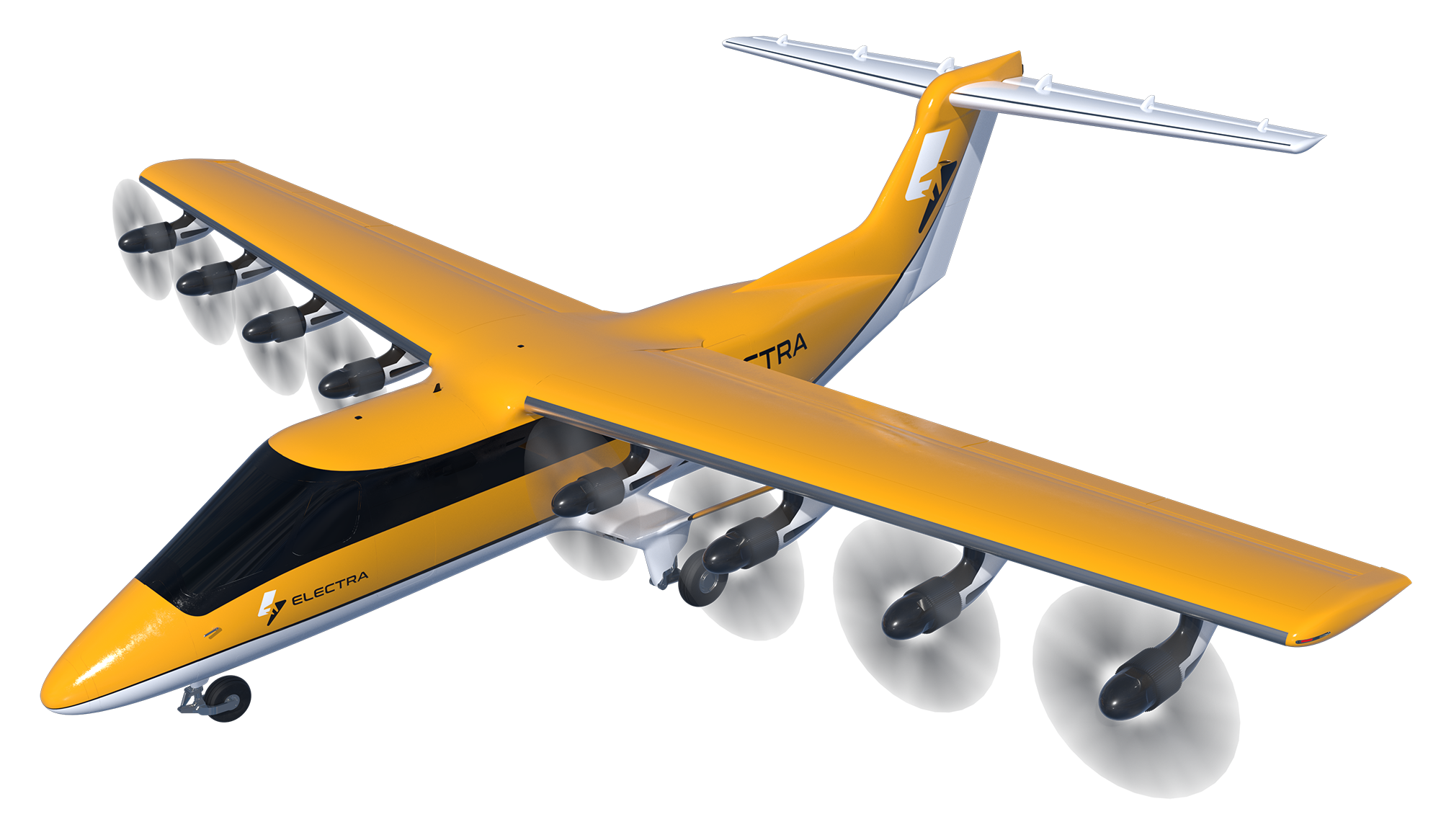
The Electra Ultra Short. A hybrid plane that can carry 9 passengers 1000+ miles at 300 mph while using 40% less fuel. The Electra, or something like it, would be a revolution in air travel. A substantial step towards making air travel cheap and Turning Airplanes into Air-busses.
Electra isn’t aiming for efficiency or speed, but rather, the ability to quietly take off from a short runway. The video details the decisions behind the Ultra Short’s design, and why hybrid electric is the right energy system for the job.
Why design for this? Because it means that airports serving Electra’s planes can be everywhere. The noise is the same as car traffic and the runway only needs to be as long as a football field. Imagine a little airport in every small town capable of flying you across half the continental United States.
To see what a revolution this is, consider flying between LA and SF, at 340 miles of separation, that takes the Ultra Short about an hour. With many small airports, the commute to and from the airport can be quite short perhaps 20 minutes each way. Add 20 minutes to board and your commute is only 2 hours. Not much longer than some folks in LA spend driving to work!
This unlocks the opportunity to work in a city that’s 100’s of miles away. The growth in labor markets, the boost in innovation, and the opportunity to live where you want would be incredible.
What would it cost? If we got rid of luggage and automated the flights, I think costs could fall by 50% or more compared to a traditional flight. And the time spent commuting, in security, and boarding would fall dramatically.
Less regulation for this class of planes means there are more opportunities to innovate with regenerative gliding, slingshots for takeoff, or new engines. Optimizing for short trips means a smaller battery and more passengers. Switching to natural gas would mean lower fuel weight and half the emissions. Borrowing tricks from Lightcell, Astro Mechanica, and NetPower means more efficient engines.
I wish the Electra team luck.
2.
Advice from someone in their 30s who has successfully kept the majority of their friends. This Hacker News comment (on an article about losing friends) offers good advice on maintaining relationships. Good habits can stop the natural tendency to drift apart.
One of the side effects of prosperity is the freedom to pursue education, careers, and love in far flung locations. But will that always be the case? Scott Alexander suggests that further growth will make it possible for people to build intentional communities.
For me, the follow on comments lost the plot. I don’t care about assembling some niche group that shares my interests. And I don’t need extreme commitment or interdependence.
I just want to live near my friends. I want hanging out to be effortless. I want their kids to be able to walk over to my place when they need to run errands. I want them to be able to stop by and vent when they’ve had a hard day.
With this context, the barriers are clear. People need:
To be able to build houses of all shapes and sizes wherever they want.
To have enough money to buy houses where they want.
Fast transit to their job from anywhere.
Walkable cities
The first and fourth are solved by housing deregulation and city planning. The second one is tricky, because as incomes go up land values rise too. Growth and land value taxation can help, but they won’t fix the fact that everyone wants to live in the same places.
Instead, I think better transportation can address #2 and #3 by giving everyone a wider geographic range they can live and work, thus diffusing demand. EVTOL’s, the Ultra Short mentioned above, public transit, congestion pricing, self-driving cars, micromobility, and remote work can all contribute here.
A recent example of transport reviving social networks: E-bikes are the healthiest thing to ever happen to US teenagers.
EDIT More resources on how to live near friends:
Supernuclear is a newsletter devoted helping people build local communities of friends.
Live near friends is a service to help you find duplexes (or larger) in your city so that you can move together with your friends.
The Neighborhood “… is an unconference series and real estate fund that makes amazing coliving and cohousing communities.”
3.
High Variance Management. Sebastian Bensusan contrasts roles where you need a consistently good performance (like a Broadway show) to those where high variance is valuable (a movie thrives on your best take, so you should take risks). He suggests how to manage a team to get high-variance, high-upside results; good advice for those working on the frontier of their field.
It’s remarkable how academia does the opposite of this advice in a lot of ways. “They will surprise you with their opinions” and “Don’t ask a high variance [person] to be consistent” sound like the opposite of how people get promoted in research.
Maybe it’s time build and manage scientific teams around variance.
Everything else
Arjun Ramani’s Dispatches from India details what he learned about the “vast, heterogeneous and only half-modernized state” as a reporter for The Economist. The piece, like the country, is not easily summarized.
Expand the Child Tax Credit. A recent report from the Institute for Family Studies finds that financial incentives are cost effective and raise fertility in a variety of contexts. But it’s expensive: returning to replacement fertility in the U.S. would cost $550-$800 billion per year. Few people appreciate that baby bonuses can be debt financed since babies grow up to be taxpayers. That makes the true cost of such a program.
Microdosing Willpower - saraht0n1n A “smart and hardworking woman with solid executive function” tries a low dose of Ozempic and finds it increases her willpower even further. There were some downsides: sleepiness 24 hours after taking the shot and minor GI issues.
It’s only one paper, but the relationship between Lithium Deficiency and Alzheimer's Disease is intriguing.
Synthetic biology for space exploration. Synbio is struggling to find a niche on Earth, but it’s going to be a huge deal for spacefaring civilizations. The fermentation process can be adapted to make food and drugs, synthesize the precursors for plastics or textiles, and process waste. Replicating the industrial tech stack in such a small package (with only a few experts) is a big deal for space colonies.
Echo Acoustic Liquid Handlers move small droplets around using sound. File with digital microfluidics and M2 automation’s nanodispensing tech.
Volumetric 3D Printing Is REALLY FAST. Neat technique to shine light in precise ways into a rotating cylinder of resin.
With Directed Self Assembly, the Chips Make Themselves (Kinda). A technique in semiconductor manufacturing leverages self-organizing molecules to clean up patterns and make finer lines. The semiconductor industry is inching closer to the original visions for nanotechnology.
Maybe Data Really is All You Need. Chris Paxton gets on the data scaling train.
Diffusion Language Models are Super Data Learners. Diffusion models are cool, maybe they’ll be the next step for language models. It’s not all rosy though, they seem to require a lot more compute to train.
Two posts I appreciated on Gregory Gundersen’s blog:
Fourth power makes a thermal battery that uses solar electricity to make molten tin. The tin is used to heat graphite blocks and thermophotovoltaics collect light from the block when electricity is needed. They claim their energy storage system costs less than $25/kWh. But it seems too complicated. Why not use the heat directly? Why not use molten salt? They might be better off licensing Lightcell energy’s sodium illuminant technology than making expensive multi-junction cells. Regardless, at that price it’s competitive with the hopes for iron-air batteries and molten salt thermal. Good to see more “shots on goal” for cheap energy storage.
Exploring the cost and emissions impacts, feasibility and scalability of battery electric ships. A 2024 paper suggests that electrifying smaller ships on regional routes could be cost effective and “would reduce US domestic maritime GHG emissions up to 73% below 2022 levels by 2035 …”. This is similar to what I found with other transport modes: electrifying short trips can make sense. As battery costs fall, we might only need fuels for long routes.
Thanks for sharing this Sam.
Neat concept for a hybrid aircraft using a gas turbine combined with battery electric propulsion.
I can't help but think they could have gone all the way to VTOL, however. Use the battery and lightweight motors for take off and landing, (plus a little bit in-flight). Using larger props, they could also make it more efficient.
Still, I think there is a lot of possibility here. Perhaps America doesn't need HSR, it just needs these.
> Fourth power makes a thermal battery that uses solar electricity to make molten tin. The tin is used to heat graphite blocks and thermophotovoltaics collect light from the block when electricity is needed. They claim their energy storage system costs less than $25/kWh. But it seems too complicated. Why not use the heat directly? Why not use molten salt? They might be better off licensing Lightcell energy’s sodium illuminant technology than making expensive multi-junction cells. Regardless, at that price it’s competitive with the hopes for iron-air batteries and molten salt thermal. Good to see more “shots on goal” for cheap energy storage.
Don't really understand the commercial value of thermophotovoltaics. I read about them I was looking for external combustion engines for my metal combustion projects. Their efficiency is about 30-40% and need specific conditions and expensive equipment. What is the value added compared to conventional stream engines?
Generally the rule of thumb is that unless your engine is dramatically better than the competition, it's not worth scaling a new type of engine.
Additionally according to CATL, they expect sodium ion batteries to reach $10/kWh soon.